
If you’ve scrolled through social media, read a news headline, or wondered why your streaming app keeps recommending the same obscure true-crime documentaries, you’ve likely encountered “the algorithm”.
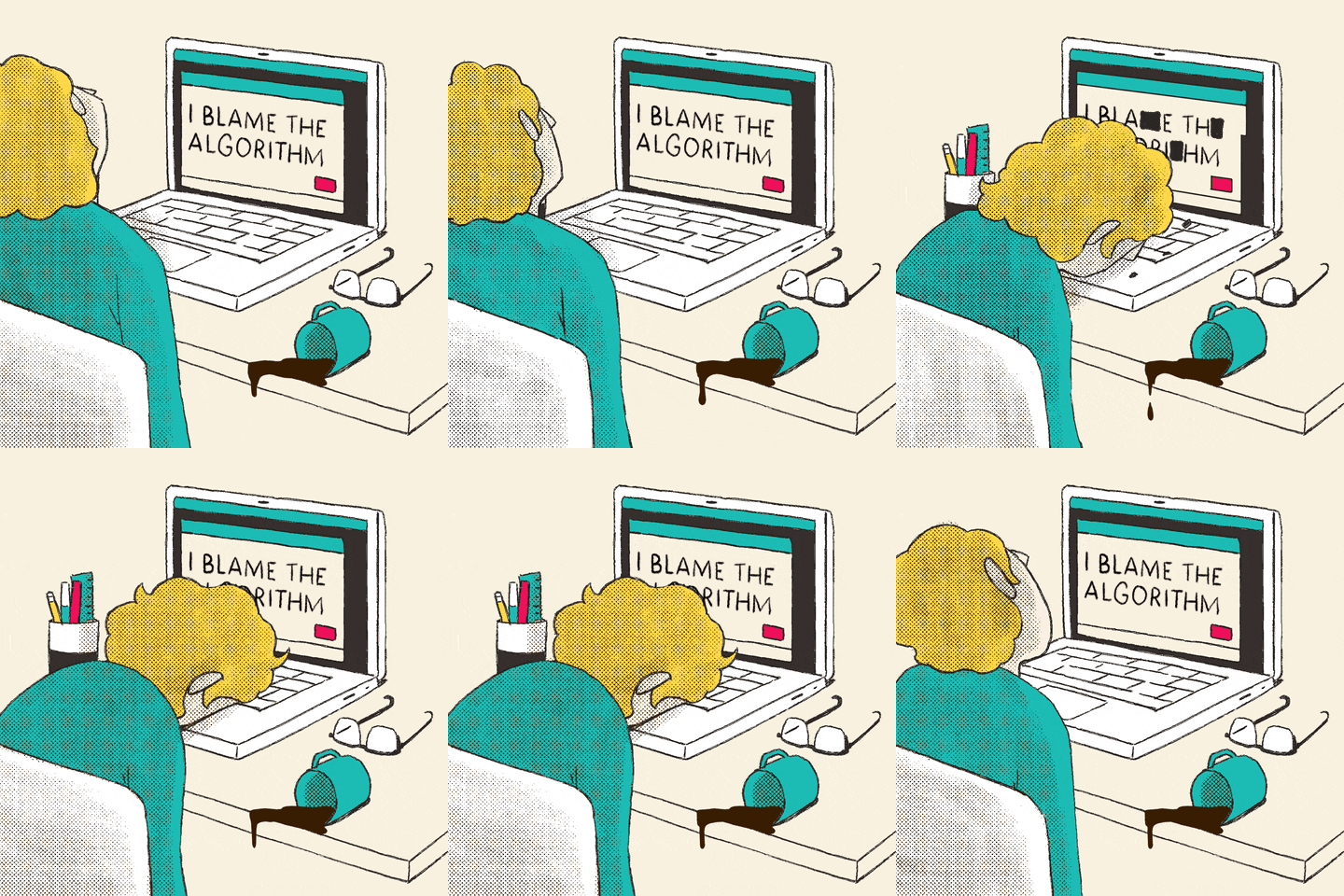
Lately, it seems like the algorithm has become society’s ultimate scapegoat. It is blamed for polarizing elections, ruining our attention spans, hiding our friends’ posts, and addicting us to short-form videos. But what actually is an algorithm, and is it truly the digital villain it’s made out to be?
Let’s demystify the code behind the curtain and explore why this technical concept has become the internet’s favourite scapegoat.
What is an algorithm in simple terms?
At its most basic level, an algorithm is simply a set of step-by-step instructions designed to solve a specific problem or complete a task.
You don’t need a computer science degree to understand an algorithm because you already use them every day. A recipe for baking a Victoria sponge is a kitchen algorithm. The precise steps you take to tie your shoelaces or assemble flat-pack furniture are algorithms.
In the digital realm, a computer algorithm takes an input (like your search query or your watch history), processes it through a strict set of rules, and delivers an output (like a page of search results or a recommended video).
The building blocks of computer algorithms
Computer algorithms rely on a few core logic structures to make decisions:
- Sequencing: Executing instructions in a specific, chronological order.
- Selection (Conditionals): Making decisions based on “if-then” logic (e.g., If a user clicks on a cat video, then show them more cat videos).
- Iteration (Loops): Repeating a process until a certain condition is met (e.g., Keep refreshing the feed until the user closes the app).
How do modern algorithms actually work?
Historically, algorithms were rigid. A programmer wrote a specific rule, and the computer followed it blindly. However, today’s algorithmic landscape is dominated by machine learning and artificial intelligence (AI).
Instead of humans programming every single rule, modern machine learning algorithms are fed massive amounts of data. The system analyzes this data to find patterns and essentially writes its own rules.
When you use platforms like TikTok, Netflix, or Spotify, the algorithm isn’t just looking at what you search for. It is tracking a complex web of signals:
- How many seconds you linger on a post before scrolling past.
- The time of day you are browsing.
- The behavior of thousands of other users who share your demographic or viewing habits.
The algorithm uses these data points to build a predictive model, constantly guessing what will keep your eyes on the screen for the longest possible time.
Why does everyone keep blaming the algorithm?
“The algorithm hid my post.” “The algorithm is making us angry.” “The algorithm is shadowbanning creators.”
We hear these complaints daily. But why has a mathematical concept become the target of so much public frustration?
1. The quest for user engagement (The outrage economy)
Social media algorithms are generally optimized for one primary metric: engagement. The longer you stay on an app, the more adverts you see, and the more money the platform makes.
Unfortunately, human psychology dictates that we are more likely to click on, comment on, and share content that triggers strong emotional responses—specifically, outrage, fear, and moral indignation. Because the algorithm is trained to maximize watch time, it naturally prioritizes sensationalist, divisive, or controversial content.
When society becomes more polarized, we blame the algorithm. But the algorithm is simply a mirror reflecting back what keeps us clicking.
2. The “black box” problem
One of the biggest issues with modern AI and machine learning algorithms is that they are proprietary, intellectual property. Tech giants like Meta, Google, and ByteDance guard their source code fiercely.
This creates a “black box” effect. We see the input (our data) and the output (our feed), but the exact mechanism in the middle is completely hidden. Because the public cannot see how decisions are being made, the algorithm becomes a mysterious, omnipotent entity—making it the perfect target for blame when things go wrong.
3. A convenient shield for tech corporations
Blaming “the algorithm” often feels like blaming a natural disaster—an unpredictable force of nature that no one can control.
Tech companies sometimes lean into this narrative because it deflects human accountability. It is much easier for an executive to say, “Our algorithm surface-levelled that misinformation accidentally,” than to admit, “We deliberately designed our system to prioritize inflammatory content because it drives our advertising revenue.”
Algorithms do not have morals, intent, or consciousness. They are tools built by corporations, optimized for corporate goals.
The verdict: Is the algorithm actually to blame?
So, should we keep blaming the algorithm? Yes and no.
We shouldn’t blame algorithms for having a consciousness or a malicious agenda, because they don’t. They are math, code, and data.
However, we should hold the architects of these algorithms accountable. The algorithmic bias, filter bubbles, and echo chambers we experience today are the direct result of systems designed to value corporate profit over societal well-being.
The next time you find yourself falling down an internet rabbit hole or feeling frustrated by your social media feed, remember: you aren’t fighting a sentient machine. You are interacting with a highly sophisticated calculator that is trying to guess your next move. And sometimes, the best way to defeat the algorithm is simply to lock your screen and walk away.