The digital landscape has shifted. As we navigate 2026, the rise of generative artificial intelligence has forced social media giants to draw a line in the sand. For musicians, illustrators, and digital creators, understanding AI labels on social media is no longer optional—it is a core part of content strategy and platform compliance.
Whether you are using AI to enhance a music video or generating a promotional graphic, here is everything you need to know about the new transparency standards on Instagram, TikTok, and YouTube.
The rise of mandatory AI disclosure
Social media platforms now use a combination of user disclosure and automated detection to identify synthetic media. This shift is driven by a need for transparency, ensuring audiences can distinguish between human-captured moments and AI-generated content.
1. Meta (Instagram and Facebook)
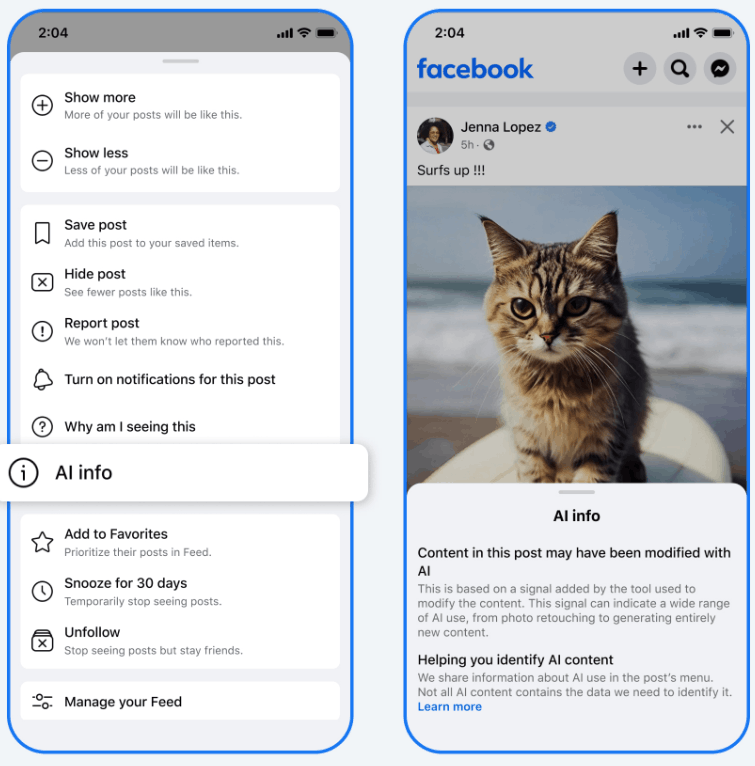
Meta’s approach focuses on the “AI Info” label. This tag is applied to organic posts where AI has been used to create or significantly alter imagery or audio.
- Detection: Meta uses C2PA metadata and invisible watermarking to catch AI content even if you don’t disclose it.
- Reach Impact: Officially, the Instagram algorithm does not penalise posts with the AI label. However, fan engagement may vary based on your audience’s perception of “authenticity.”
2. TikTok
TikTok is particularly strict regarding synthetic media that depicts realistic people or places.
- The Rule: You must use the built-in “AI-generated” toggle for any content that features AI voices or realistic synthetic visuals.
- Penalties: Failure to label can lead to content suppression or removal from the For You Feed (FYP).
- Exceptions: Basic AI-assisted workflows, such as using AI for caption generation or scriptwriting, generally do not require a label.
3. YouTube
YouTube requires creators to disclose “altered or synthetic content” that looks or sounds real.
- Music & Audio: If you use an AI voice clone or synthetic singing, you must check the disclosure box in YouTube Studio.
- Monetisation: Pure AI music channels (mass-produced loops without human curation) are increasingly being flagged under the “Inauthentic Content” policy, risking demonetisation.
Why “Human-in-the-loop” matters for SEO
Search engines and social algorithms are increasingly rewarding Originality. To maintain your search engine rankings and platform authority, you should adopt a “Human-in-the-loop” workflow.
- Human Curation: Use AI for the heavy lifting (like stems or initial sketches) but ensure the final “master” has human soul.
- Behind-the-Scenes (BTS): Sharing your process—showing yourself actually painting or recording—acts as “Proof of Human.” This is a high-value SEO keyword trend for 2026 known as “Transparency Marketing.”
Best practices for artists in 2026
To protect your artist brand and ensure your digital distribution isn’t hampered by flags, follow these guidelines:
Use clear disclaimers
Don’t hide your tools. A simple line at the end of a caption—e.g., “Visuals created with Midjourney; concept and edit by [Artist Name]”—builds trust with your fanbase.
Monitor your metadata
If you use professional tools like Adobe Premiere or Photoshop, be aware that they often embed Content Credentials automatically. If you want to avoid an “AI Info” tag for minor edits (like a generative fill on a background), you must understand how these signals are read by social media algorithms.
Focus on “Emotional Value”
The AI label only hurts when the content feels “uncanny” or “low-effort.” If the art is compelling and the music resonates, a small label in the corner won’t stop a fan from hitting “Save.”
Summary of platform requirements
| Platform | Required for… | Penalty for non-disclosure |
|---|---|---|
| Photorealistic AI, synthetic audio | Reach suppression (unconfirmed) / Warning | |
| TikTok | Realistic scenes/people, AI voices | Shadowban or video removal |
| YouTube | Realistic synthetic content, voice clones | Demonetisation / Content ID strikes |
By staying transparent and focusing on creative authenticity, you can use AI as a powerful music marketing tool without sacrificing your connection with your audience. Don’t fear the label—own your process.