
While a dynamic microphone is the original, robost option. It isn’t quite as precise as a condenser microphone. A dynamic mic is a great option for on the go concerts but a condenser mic is one you’d record in a studio with.
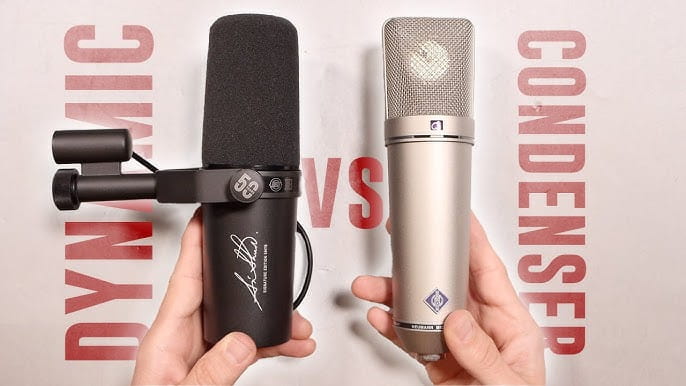
What is a dynamic microphone?
Think of a dynamic microphone as the rugged workhorse of the audio world. If you see a singer on stage at a live concert, they are almost certainly holding a dynamic mic.
How it works
Inside the microphone, there is a small wire coil attached to a thin membrane (the diaphragm) next to a magnet. When sound waves hit the membrane, it moves the coil back and forth against the magnet, creating an electrical signal. Because these parts are relatively heavy, it takes a decent amount of acoustic energy to move them.
The pros
- Incredibly durable: You can drop them, throw them in a backpack, and they will still work perfectly.
- Rejects background noise: Because they are less sensitive, they tend to ignore quiet background noises like a clicking computer fan, traffic outside, or room echo.
- Handles loud sounds: They do not distort easily, making them perfect for loud sources.
The cons
- Less detailed: They can miss the subtle “airiness” or crisp high frequencies of a performance.
What is a condenser microphone?
Think of a condenser microphone as a sensitive, high-precision laboratory instrument. These are the classic, bulky microphones you see hanging from shock mounts in professional recording studios.
How it works
Instead of a heavy coil, a condenser mic uses an ultra-thin, lightweight membrane placed right next to a solid metal plate. This setup acts like a capacitor (historically called a condenser). Because the membrane is so light, it reacts instantly to the quietest, fastest sound waves.
Note: Because of how they are built, condenser microphones require external power to work. You will need to press the +48V (Phantom Power) button on your audio interface to turn them on.
The pros
- Highly detailed: They capture a rich, crisp, and professional sound that makes vocals feel like they are right in front of the listener.
- Excellent frequency response: They pick up deep lows and sparkling highs beautifully.
The cons
- Too sensitive sometimes: They will pick up everything. If your room is not acoustically treated, a condenser mic will easily capture the sound of your fridge humming, rain hitting the window, or the echo bouncing off your bare walls.
- Fragile: They are delicate and can be damaged if dropped or exposed to extreme moisture.
Comparison at a glance
| Feature | Dynamic Microphone | Condenser Microphone |
|---|---|---|
| Best Environment | Unfinished rooms, home studios, live stages | Quiet rooms, acoustically treated spaces |
| Power Required | No (Plug and play) | Yes (+48V Phantom Power) |
| Sensitivity | Low (Ignores quiet background noise) | High (Captures every detail and room echo) |
| Durability | Built like a tank | Delicate |
| Common Uses | Podcasting, rock vocals, loud guitars, drums | Studio vocals, acoustic guitar, voiceover |
Which one should you choose?
To make your final decision, look at the room you are recording in.
If you are recording at a desk in a normal bedroom with hard floors, open windows, and family or flatmates moving around the house, a dynamic microphone (like the classic Shure SM58 or Shure MV7) will be much more forgiving and give you a cleaner recording.
If you have a very quiet space—perhaps a room with lots of carpets, curtains, and soft furnishings to absorb echo—and you want to capture pristine, radio-ready acoustic music or professional voiceovers, invest in a condenser microphone (like a Rode NT1 or Audio-Technica AT2020).