
There isn’t a simple ‘yes’ or ‘no’ answer to whether vinyl is better than streaming; it entirely depends on what you value in your listening experience. The debate essentially pits convenience and accessibility against ritual and perceived sound quality.
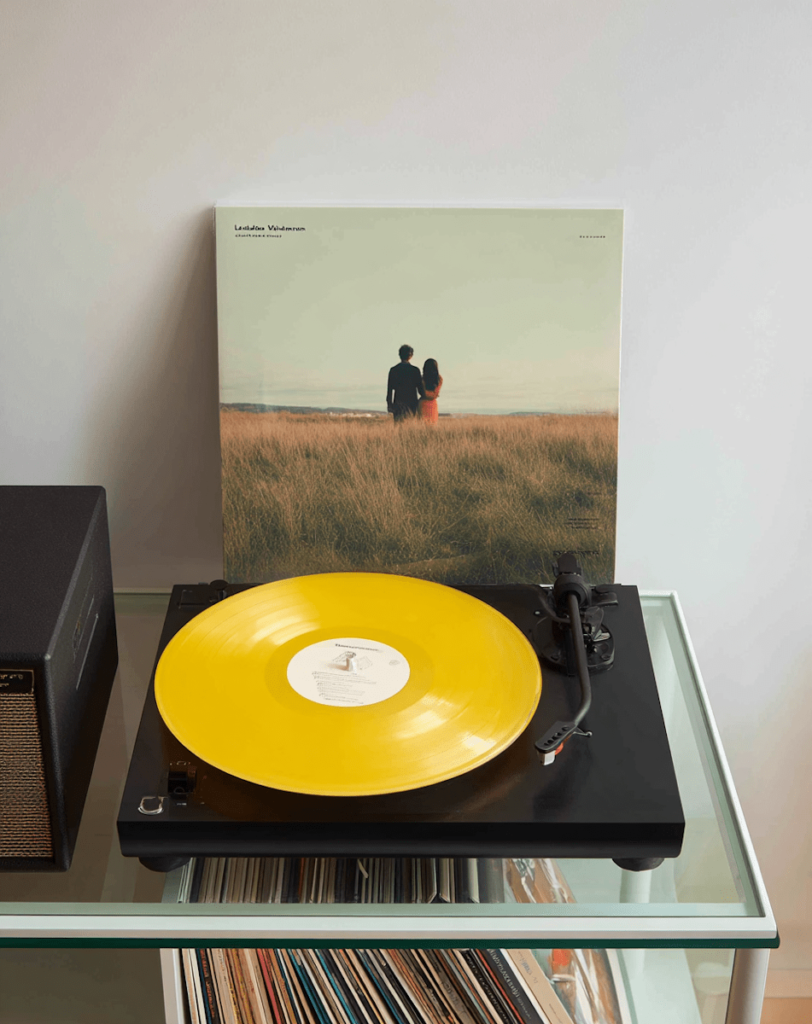
The case for vinyl: the ritual and the ‘warmth’ 🎶
For many audiophiles, vinyl offers a superior, more engaging, and authentic experience that streaming can’t replicate.
1. Perceived sound quality and mastering
While technically, high-resolution digital streaming can capture all the detail of the original recording, vinyl offers a different sonic ‘flavour’ that many prefer.
- Analogue sound: Vinyl is an analogue format, meaning the sound is stored as a continuous wave etched into the grooves, theoretically mirroring the original sound waves. Many listeners describe this as a warmer, richer, and more natural sound than digital.
- Dynamic range: Crucially, vinyl masters are often less compressed than their digital counterparts. Historically, digital releases have been victims of the ‘loudness war’ (where music is made artificially louder by compressing the dynamic range). Vinyl requires a more delicate master, often resulting in a greater dynamic range—the contrast between the quietest and loudest parts—which can make the music sound more detailed and ‘alive’.
- Imperfections as character: The occasional pop, hiss, or crackle is inherent to the analogue process, but for enthusiasts, these are part of the charm and character of the experience.
2. The tangibility and ritual
The most significant benefit of vinyl lies outside the measurement of sound. It changes how you interact with music.
- Active listening: Playing a record is a deliberate, ritualistic process—taking the record out of its sleeve, placing it on the turntable, dropping the needle, and flipping it halfway through. This process encourages active, full-album listening, exactly as the artist intended the track sequencing to be heard.
- Artistic connection: The large album artwork is a true visual extension of the music, and the liner notes, lyrics, and inserts provide a level of physical, artistic tangibility that streaming services have lost.
- Ownership and collectability: You own a physical object that can’t be removed from your collection by a licensing dispute. Records are also valuable collectable items that can appreciate over time.
The case for streaming: convenience and precision 📱
Streaming services are the undisputed champions of accessibility, choice, and objective technical consistency.
1. Unmatched convenience and access
The primary advantage of streaming is that it has fundamentally changed how music is consumed, offering an experience that’s impossible with physical media.
- Vast library: Services like Spotify, Apple Music, and Tidal offer access to millions of songs instantly. This makes music discovery incredibly easy through curated playlists and powerful algorithms.
- Portability: Your entire library travels with you, accessible anywhere in the world with an internet connection, on almost any device.
- Cost-effective: A single monthly subscription grants you unlimited access to an enormous catalogue, making the entry price far lower than the recurring cost of purchasing physical albums and dedicated equipment.
2. Objective sound quality
In a technical sense, modern high-resolution streaming has surpassed vinyl in several measurable ways.
- No physical degradation: Unlike vinyl, which suffers from wear and tear, dust, and scratches, a digital file offers perfect playback consistency every single time.
- Superior specifications: Digital formats boast a wider dynamic range (in terms of measurable decibels) and better channel separation than vinyl, offering a cleaner, more precise audio signal.
- High-resolution (lossless) audio: Premium streaming tiers (like Tidal HiFi or Apple Music Lossless) offer lossless, high-resolution files that contain all the original audio data, objectively matching or exceeding the clarity of a CD, and often surpassing the technical limitations of vinyl.
Final verdict: which is ‘better’?
The best format is subjective and depends entirely on your priority:
| If you prioritise… | The winner is… | Why? |
|---|---|---|
| Convenience, portability, & discovery | Streaming | Instant access to millions of songs, anywhere, on any device. |
| The ritual, album appreciation, & art | Vinyl | Offers a tactile, collectable object that encourages a deeper, more focused listening session. |
| Objectively accurate sound | Streaming | High-resolution lossless files offer perfect, repeatable playback with superior measurable metrics like dynamic range and channel separation. |
| Subjectively ‘warm’ & dynamic sound | Vinyl | The analogue master is often less compressed than the digital counterpart, providing a beloved ‘warmth’ and greater contrast in volume. |
Ultimately, streaming is the undisputed champion of convenience and accessibility, while vinyl offers an unmatched connection and listening ritual. Many modern music lovers choose to embrace both, using streaming for discovery and on-the-go listening, and reserving vinyl for the albums they truly love and wish to experience with full, dedicated attention.