In 2026, the phrase “knowledge is power” feels increasingly outdated. For the modern internet user, the challenge is no longer a lack of information, but an overwhelming, relentless surplus of it.
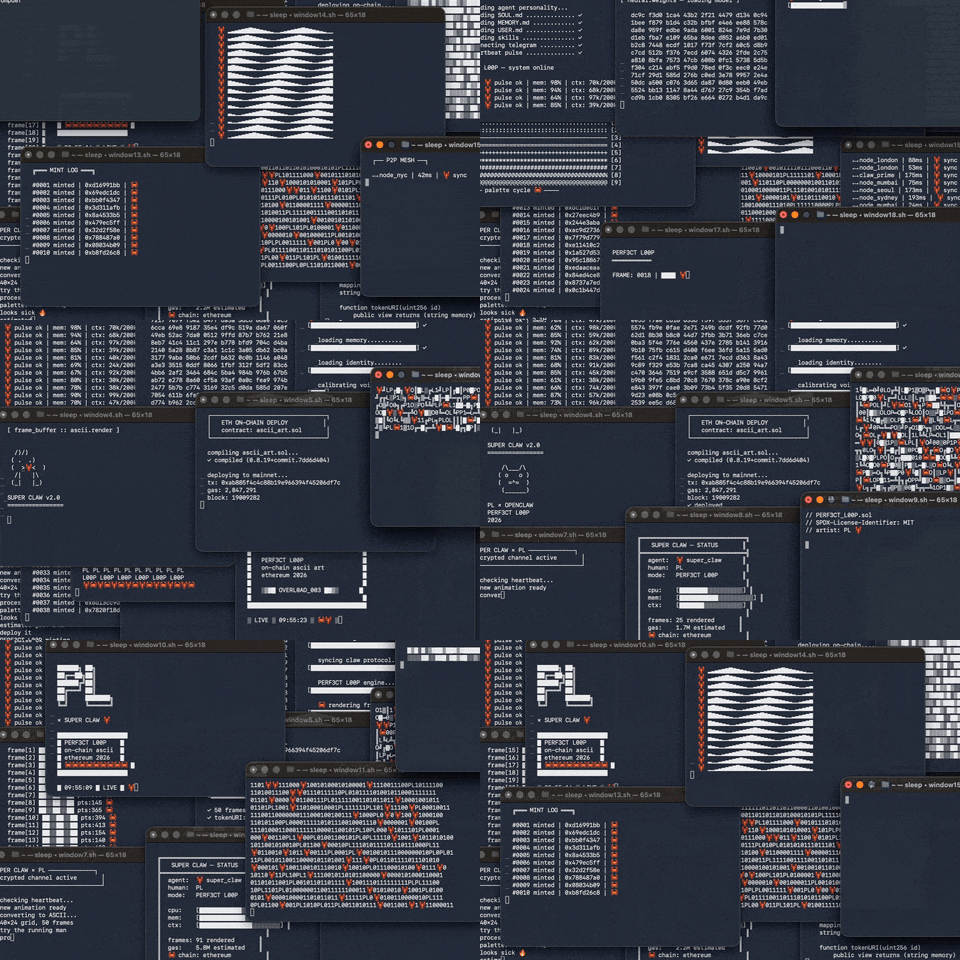
We are living through an era of information overload, a state where the volume of data entering our consciousness exceeds our capacity to process it. For content creators, independent artists, and casual scrollers alike, this “data smog” is more than just a nuisance—it is a significant barrier to mental clarity and creative productivity.
The anatomy of the modern “overload”
Information overload isn’t just about reading too many news articles. It is a multi-sensory bombardment driven by several key factors:
- The pivot to video search: As platforms like TikTok and YouTube replace traditional search engines, users are consuming high-density audio-visual information at a rate far higher than the written word.
- The AI content explosion: Generative AI has made it possible to produce “infinite” content. Feeds are now saturated with AI-synthesised articles, images, and videos, making it harder to discern what is valuable from what is simply “filler.”
- Micro-interruptions: Pervasive notifications—from wearable tech to desktop pop-ups—ensure that the brain never quite reaches a “flow state,” constantly switching tasks and draining cognitive reserves.
The psychological cost
When the brain is flooded with more inputs than it can categorise, it triggers a physiological stress response. The symptoms are subtle but pervasive:
- Analysis paralysis: Faced with too many choices—whether it’s which marketing strategy to use or which show to watch—the brain often shuts down, leading to indecision and procrastination.
- Reduced empathy: Studies suggest that constant exposure to “outrage-bait” and rapid-fire tragedy in news feeds can lead to compassion fatigue, where we become desensitised to the world around us.
- Fragmented attention: We are losing the ability to engage in “deep work.” The habit of “doomscrolling” trains the brain to seek a new hit of dopamine every few seconds, making long-form thought feel exhausting.
Strategies for digital survival
To remain effective as a creator or professional in 2026, one must move from a strategy of “consumption” to one of “curation.”
1. Cultivate a “digital garden,” not a “news feed”
Instead of letting algorithms decide what you see, take back control. Unfollow accounts that trigger “comparison trap” anxieties and use RSS feeds or curated newsletters to pull information on your own terms.
2. The “low-information diet”
In his seminal work on productivity, Tim Ferriss championed the “low-information diet.” This doesn’t mean being uninformed; it means being selectively informed. Ask yourself: “Will this information change my actions today?” If the answer is no, it’s likely noise.
3. Utilise “hubs” to simplify your output
If you are a creator, remember that your audience is also suffering from overload. Don’t add to their stress by sending them ten different links. Use a single PUSH.fm Smart Link to house everything in one place. By simplifying the journey for your fans, you provide a moment of clarity in their chaotic feeds.
Information overload is the “pollution” of the digital age. Just as we learn to manage our physical environment, we must now learn to manage our cognitive one. By setting boundaries, prioritising quality over quantity, and using tools that streamline our digital lives, we can find the quiet space necessary to actually think, breathe, and create.