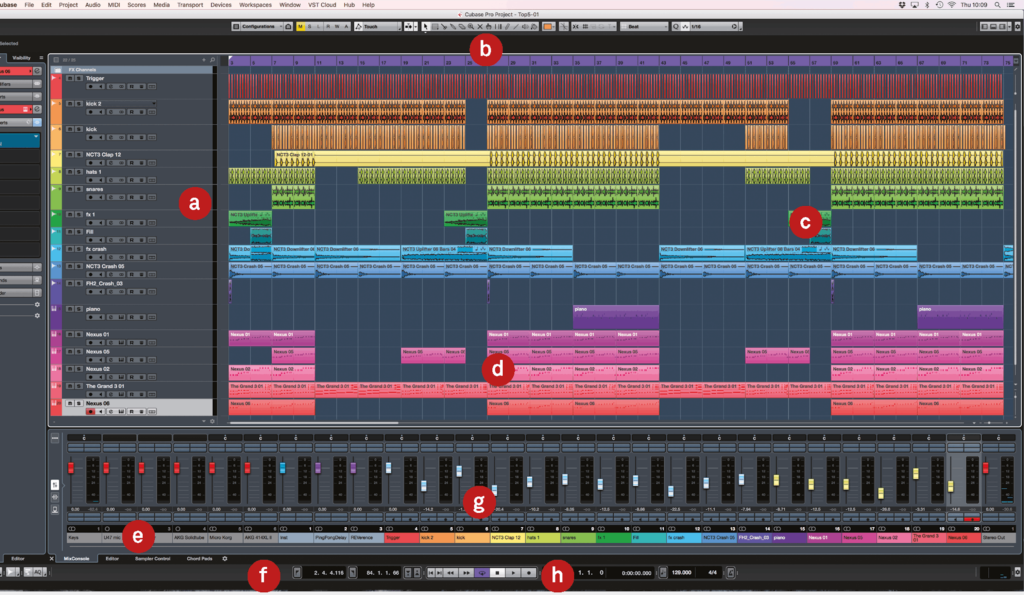
For decades, the evolution of music technology followed a predictable path: from the analogue warmth of tape to the digital precision of the DAW (Digital Audio Workstation).
However, in 2026, we have entered the era of “hybrid creativity”. This is no longer a binary choice between “human-made” and “AI-generated”. Instead, the most successful artists are those treating artificial intelligence as a sophisticated collaborator—a digital session musician that never sleeps—while ensuring the “soul” of the track remains undeniably their own.
The creative sandbox: AI as a starting point
The greatest hurdle in any home studio is often the “blank canvas” syndrome. Hybrid creativity uses generative tools to bypass the initial friction of composition. By feeding an AI a few specific prompts based on your previous work, you can generate hundreds of melodic fragments or rhythmic loops in seconds.
The secret lies in the “selection process”. The artist’s role has shifted from being a pure composer to being a high-level curator. You are the one who identifies the “ghost in the machine”—that one specific, imperfect accidental harmony that an AI might discard, but a human ear recognises as a potential hook.
Preserving your sonic signature
A “sonic signature” is the unique combination of timbre, timing, and emotional delivery that makes a listener recognise an artist within three seconds. To maintain this while using AI, you must keep the “human touchpoints” at the front of the mix:
- Organic layering: Use AI to generate complex background textures, but record your lead vocals and primary instruments live. The micro-imperfections in a human performance provide the “anchor” for the listener.
- Custom training: Rather than using generic, “off-the-shelf” models, modern artists are training private AI models on their own back-catalogue. This ensures that the suggestions the machine makes are already “in your vocabulary.”
- The 80/20 rule: Aim for a balance where 80% of the creative direction is human-led, using AI for the 20% of repetitive or technical tasks that usually drain your energy.
Efficiency as a catalyst for art
The true power of hybrid creativity is time. By automating the technical drudgery—such as cleaning up audio stems, basic levelling, or generating MIDI variations—you free up mental bandwidth for the “high-value” tasks: storytelling, performance, and connection.
The producer’s paradox: Technology has made it easier than ever to sound “perfect,” which is why sounding “human” has become the ultimate competitive advantage.
Ultimately, hybrid creativity is about enhancement, not replacement. It is about using the speed of the machine to explore more ideas than a human could in a lifetime, while using the human heart to decide which of those ideas actually matters.