
Music theory is often seen as a complex and intimidating subject, but at its core, it is simply the language of music. Understanding the fundamentals gives students the tools to read, compose, and perform music more confidently. Even if you’re just starting out, grasping these basics will make learning any instrument or piece much easier.
1. Notes and the musical alphabet
The foundation of music theory begins with notes. There are twelve unique notes in Western music:
- A, A♯/B♭, B, C, C♯/D♭, D, D♯/E♭, E, F, F♯/G♭, G, G♯/A♭
These notes repeat across octaves. Learning to identify them on your instrument and on sheet music is the first step in understanding music.
2. Scales
A scale is a sequence of notes arranged in ascending or descending order. The most common are:
- Major scales — often sound happy or bright
- Minor scales — often sound sad or reflective
Scales form the basis of melodies and harmonies. Practising scales regularly helps develop finger technique, ear training, and understanding of key signatures.
3. Key signatures
A key signature tells you which notes are sharp or flat throughout a piece. It indicates the key of the music and helps you understand which notes will sound consonant.
- Example: A piece in G major has one sharp — F♯.
- Example: A piece in F major has one flat — B♭.
Knowing key signatures allows you to play in different keys and makes sight-reading much easier.
4. Intervals
An interval is the distance between two notes. Intervals are important for building chords and understanding melodies. Common intervals include:
- Major and minor seconds, thirds, fourths, fifths
- Octaves
Recognising intervals by ear or on your instrument strengthens both your theory knowledge and musical intuition.
5. Chords
A chord is a group of notes played together. Most popular music relies on simple chord structures. Key points to know:
- Major chords — sound bright and happy
- Minor chords — sound darker or sad
- Seventh chords — add tension and colour
Learning chord shapes and progressions helps you play accompaniment, compose songs, and understand harmony.
6. Rhythm and note values
Rhythm tells you how long to hold each note. Common note values include:
- Whole note
- Half note
- Quarter note
- Eighth note
- Sixteenth note
Time signatures, such as 4/4 or 3/4, indicate how many beats are in each measure and which note value gets one beat. Understanding rhythm is crucial for playing in time and performing accurately.
7. Dynamics and articulation
Dynamics indicate how loud or soft to play, while articulation describes how notes should be played (smooth, short, accented).
- Dynamics: p (piano, soft), f (forte, loud), mf (mezzo-forte, moderately loud)
- Articulation: legato (smooth), staccato (short and detached), accent (emphasised note)
Applying these markings brings expression and emotion to your playing.
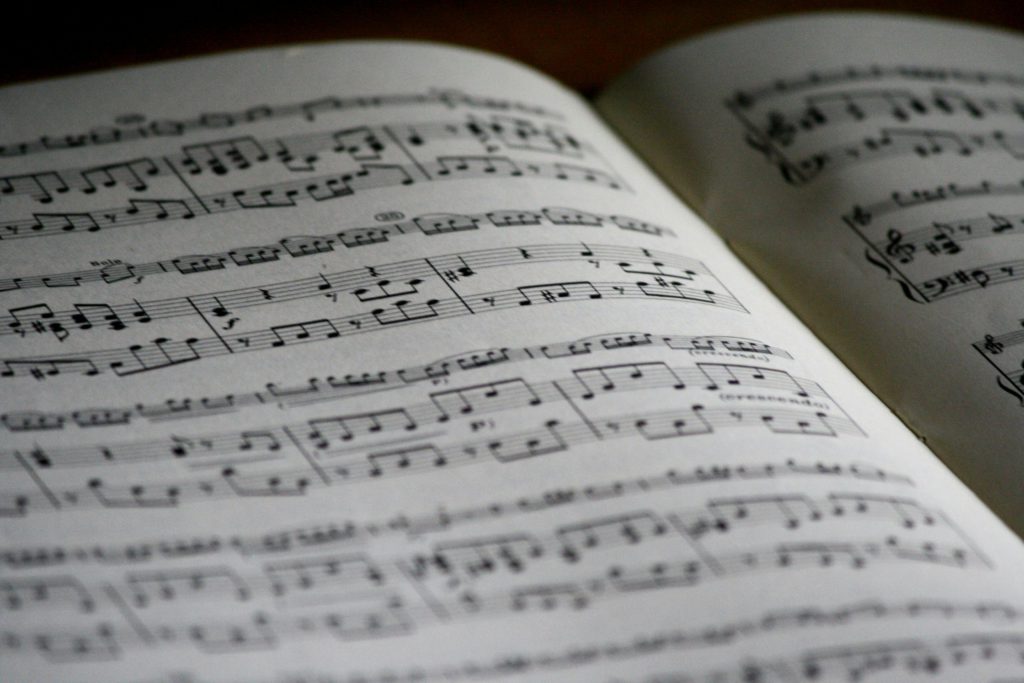
8. Reading sheet music
All the elements above come together when reading sheet music. Students should learn to:
- recognise notes on the staff
- understand clefs (treble and bass)
- interpret key signatures and time signatures
- follow dynamics and articulation marks
The more you practise reading music, the faster you will internalise theory concepts.
Music theory may seem abstract at first, but it is simply a set of tools to help you understand, perform, and create music. By learning notes, scales, key signatures, intervals, chords, rhythm, and dynamics, every student can improve both their technical skill and musical expression.